
As global supply chains expand across multiple regions, managing supplier quality consistently becomes increasingly complex. Sourcing teams and manufacturers can face difficulties in ensuring consistency when introducing new vendors or increasing the quantity of production. Conventional methods of quality improvement that equalize all suppliers are prone to waste too much of the available resources and yet yielding to the critical risks.
A tiered audit model provides a systematic means of focusing oversight on suppliers based on capability, product risk, and past performance. Organizations are able to match the intensity of inspections with the actual risk exposure, instead of subjecting all areas to the same level of scrutiny. This plan enhances lean efficiency and also bolsters quality assurance throughout distributed manufacturing networks.
Understanding Tiered Audit Structures in Supplier Quality Management
A tiered model divides suppliers into specific levels according to quantifiable criteria like a defect rate, maturity in the process, regulatory risk, and criticality of the production process. New vendors or those with high risk are subject to tighter levels of oversight whereas long-established partners are subjected to less rigorous monitoring. This division enables organizations to allocate Supplier Audit resources to areas that they provide maximum impact.
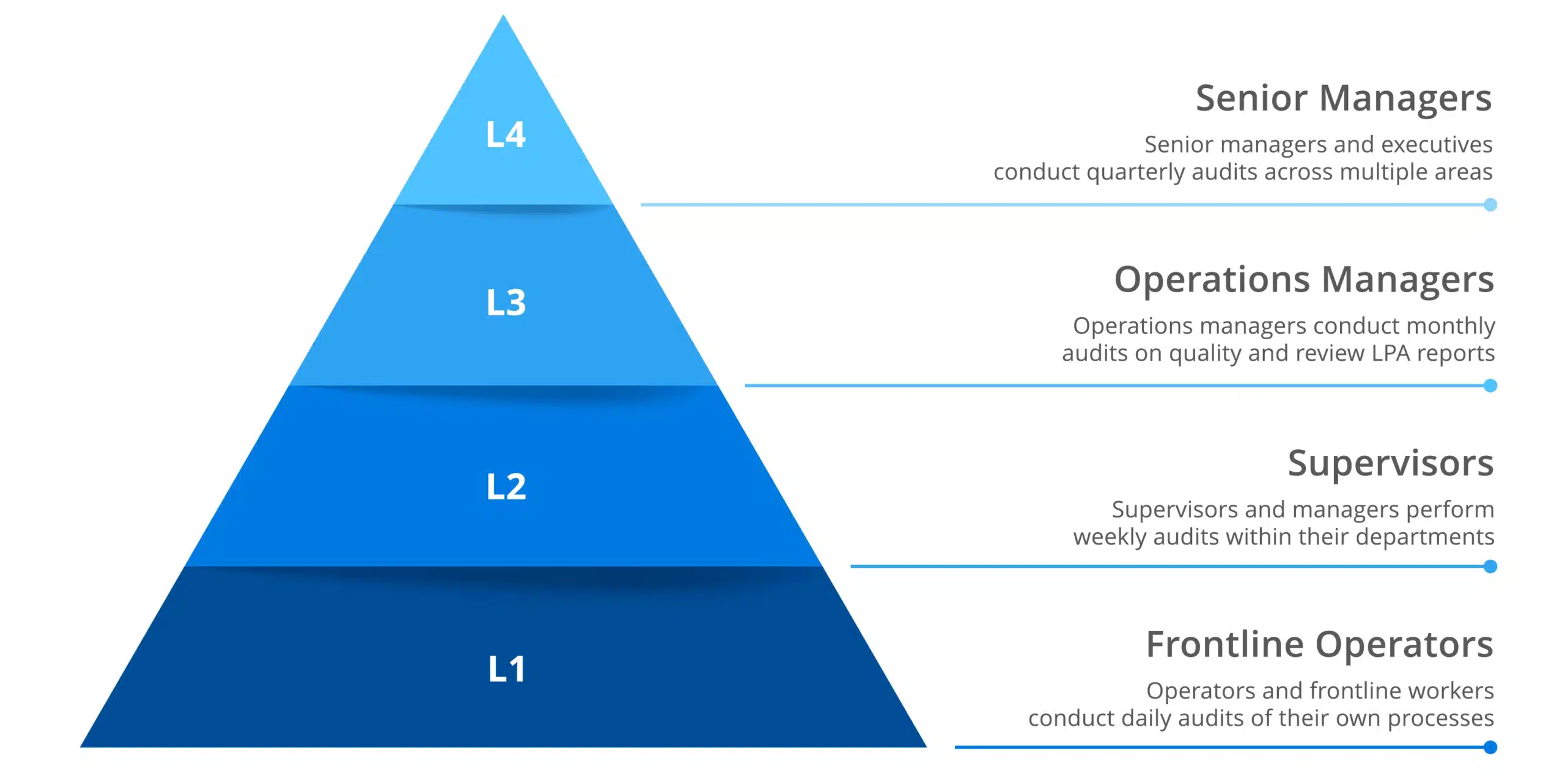
The model usually involves entry level qualification audit, operation level monitoring audit and performance audit at the strategic level. The levels have different frequency, scope, and technical depth. Balanced governance is achieved, as audit rigor is applied to the suppliers according to their maturity and the suppliers who are stable are not over-audited and those who are critical are not under-audited.
Designing Tier Criteria Based on Risk and Capability
Successful tiering initiates with objective classification parameters. Some of the indicators of supplier capability are process control sophistication, certification status, level of automation and engineering competence. Product safety impact, regulatory sensitivity, complexity of customization, and importance of supply are the risk indicators. A combination of these dimensions gives a justifiable tier placement.
Categorization is further narrowed by past performance data. The trends in the rate of defect escape, responsiveness of actions and stability in the delivery are the indicators of the actual behavior of operations, rather than the claims in the documentation. Companies that incorporate actual performance measures in tiering assignments develop dynamic audit programs that are not static but change with the change in suppliers.
Audit Scope Differentiation Across Tiers
Tiers need to be defined and the audit scope should be scaled. Entry tier suppliers need to be thoroughly validated in terms of material control, operator qualification, equipment calibration and traceability systems. This level of audit is similar to full system audits which aim at defining baseline capability prior to the commencement of volume sourcing.
Mid tier suppliers enjoy special watch of identified risk areas and historical nonconformity. The aim is no longer on the establishment of capabilities but on capability maintenance. The strategic tier suppliers are usually long term partners that have been proven to be stable and they are also subjected to performance oriented reviews that focus on continuous improvement, alignment of innovation, and capacity planning as opposed to basic compliance.
Integrating Tiered Audits with Continuous Monitoring
A tiered model is most effective when it is used in conjunction with continuous data based monitoring. Real time visibility of supplier health is achieved through production quality measurements, feedback on field performance and rates of corrective action closure. Indicators can be raised to a new level of audit instead of most of the failures happening before suppliers are escalated to a new level.
On the other hand, long-term excellence allows reduction of the tier, rewarding good suppliers with reduced audit load. This dynamism adjustment mechanism strengthens accountability and suppliers investment in process maturity. The supply base in the long-term is naturally distributed towards increased capability, which mitigates systemic quality risk throughout the network.
Raising the Oversight of the Global Supply Chain.
Global sourcing brings about geographic dispersion, cultural diversity, and regulatory diversity which puts strain on centralized quality teams. Tiered audit frameworks allow scalable implementation by providing standardized templates of audit depth on a supplier category. Audits can be performed by regional staff or third party experts on a regular basis since the expectations are set in advance.
Scalability is also improved with digital audit platforms which standardize the checklists, scoring logic and reporting formats across locations. Central quality leadership is visible but execution is at the local level. This design enables companies to grow their supplier base without corresponding growth in internal audit staff, and maintain efficiency throughout the growth.
Linking Tiered Audits to Scalable Inspection Programs
Finally, the tiered audit structures offer the governance foundation of the growing quality assurance without affecting the reliability. The classification of suppliers and the adjustment of the level of supervision allow organizations to form foreseeable layers of control that underlie the expansion of sourcing volumes and geographic coverage. The framework will make sure that the intensity of inspection is commensurate to the capability and supplier risk.
Scalable assurance of complex manufacturing eco-systems can be achieved by synchronizing tiered audits with Product Inspection strategies at different production stages. The companies will have confidence to diversify suppliers, fast track onboarding, and markets without affecting the quality and compliance of the products.


