
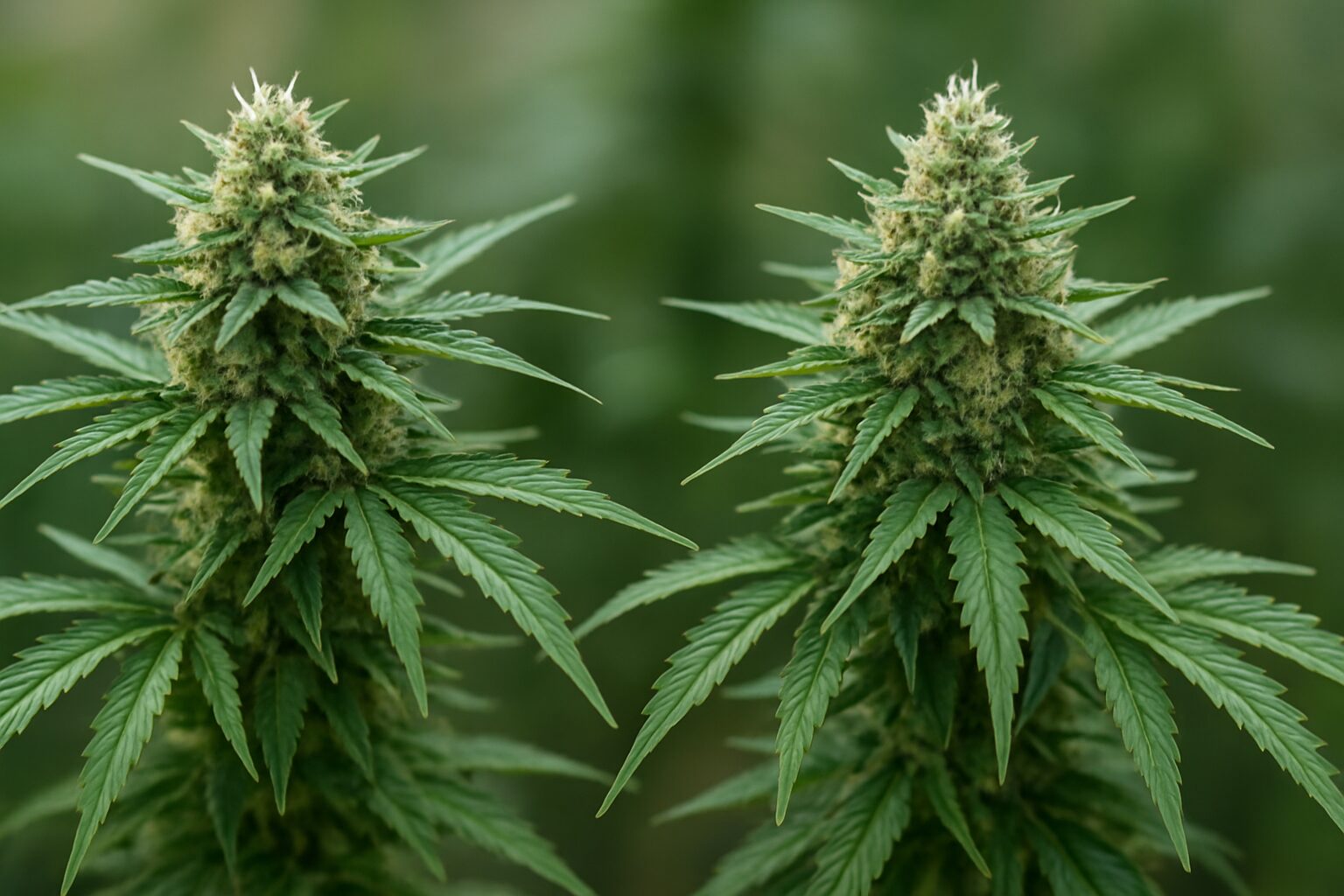
What separates one cannabis category from another? For many consumers, Indica vs sativa is the starting point for understanding cannabis characteristics. These traditional terms describe broad differences in plant growth, physical appearance, aroma, and commonly associated experiences. However, modern cannabis varieties are highly diverse, meaning that factors such as genetics, cannabinoids, and terpenes can provide a more detailed picture of each product.
In This Article
- How Do Indica Plants Typically Grow?
- What Makes Sativa Plants Visually Distinct?
- How Do Their Flowering Patterns Differ?
- Do Their Aromas Differ?
- What Role Do Terpenes Play?
- How Important Are Cannabinoid Levels?
- Why Are Hybrids Common Today?
- Can Appearance Predict a Product’s Characteristics?
- Why Does Individual Product Information Matter?
- What Is the Simplest Way to Understand the Difference?
- Conclusion
How Do Indica Plants Typically Grow?
Indica plants are traditionally recognized for their compact growth pattern. They commonly develop shorter structures, broader leaves, and dense foliage, making their appearance noticeably different from taller cannabis varieties.
These physical characteristics have also made indica genetics popular among cultivators working with limited growing spaces. Their compact structure can be particularly practical for controlled cultivation environments.
What Makes Sativa Plants Visually Distinct?
Sativa plants are generally associated with taller and more elongated growth. Their leaves tend to be narrower, while their overall structure can appear more open and expansive.
The difference in plant architecture is one of the easiest characteristics for beginners to recognize. Environmental conditions and genetics can influence the final appearance, but the traditional distinction remains useful when discussing cannabis plant types.
How Do Their Flowering Patterns Differ?
One notable cultivation characteristic is flowering behavior. Traditional indica genetics are often associated with comparatively shorter flowering periods, while sativa genetics have historically been linked with longer flowering cycles.
These differences can influence cultivation planning, particularly when growers consider environmental conditions, available space, and production schedules.
Do Their Aromas Differ?
Cannabis aroma comes largely from its terpene composition. Different varieties can produce profiles ranging from citrus and fruit notes to earthy, floral, pine-like, or spicy aromas.
Rather than assuming that every indica or sativa has one specific scent, it is more accurate to examine the individual variety. Two products from the same broad category can have completely different aromatic profiles.
What Role Do Terpenes Play?
Terpenes are naturally occurring aromatic compounds that contribute to the distinctive smell and flavor of cannabis. Commonly discussed terpenes include limonene, myrcene, pinene, and caryophyllene.
For consumers comparing products, terpene information can add another useful layer of detail. It helps explain why products with similar category labels may still have noticeably different sensory characteristics.
How Important Are Cannabinoid Levels?
Cannabinoid concentrations are another major factor in understanding cannabis products. THC and CBD are among the best-known cannabinoids, and their levels can vary substantially between varieties.
A product’s cannabinoid profile offers measurable information that complements traditional category descriptions. Checking these details can provide a more complete understanding of a particular product.
Why Are Hybrids Common Today?
Modern cannabis cultivation has produced a wide range of hybrid varieties. These plants combine genetics from different lineages and may display characteristics traditionally associated with both indica and sativa.
Hybrids can therefore provide considerable diversity in plant structure, aroma, cannabinoid content, and terpene composition. Their presence also demonstrates why cannabis cannot always be divided into two completely separate categories.
Can Appearance Predict a Product’s Characteristics?
Appearance can provide clues about a plant’s genetic background, but it does not reveal everything about the finished product. Flower structure, color, density, and trichome development can vary according to genetics and cultivation conditions.
For a more complete comparison, visual characteristics are best considered alongside cannabinoid and terpene information.
Why Does Individual Product Information Matter?
Traditional labels offer broad categories, while individual product details provide greater specificity. Growing conditions, genetics, harvesting practices, curing, and storage can all influence the final characteristics of cannabis.
This makes product-by-product comparison especially useful for consumers who want to understand differences beyond simple category names.
What Is the Simplest Way to Understand the Difference?
A practical approach is to view indica and sativa as traditional botanical and market categories rather than absolute classifications. Indica is generally associated with compact plants and broader leaves, while sativa is traditionally linked with taller plants and narrower leaves.
From there, cannabinoid content, terpene composition, genetics, and cultivation characteristics can provide additional insight. This broader perspective creates a more accurate picture of cannabis diversity.
Conclusion
Indica and sativa represent two long-standing ways of describing cannabis characteristics, particularly differences in plant structure and traditional growing patterns. Indica varieties are commonly associated with compact growth and broad leaves, while sativa varieties are known for taller structures and narrower foliage. Modern hybrids have expanded this range considerably. By examining genetics, cannabinoids, terpenes, aroma, flowering behavior, and physical characteristics together, consumers can gain a more complete understanding of what makes each cannabis variety distinctive.